

In lieu of my presentation at @researchEDBPL, a thread on the most effective implementation of retrieval practice ‘Retrieval Practice- What Every Teacher Needs to Know’.
1/n
? Retrieval has been shown to be effective for all learners in all subjects. Yang (2021) found retrieval improved learning for pupils in primary, secondary and post secondary education, across 18 subjects ans for male and female pupils.

The EEF Cog Sci review showed retrieval as one of the most impactful cog sci strategies. @PoojaAgarwal recent review of classroom-based research found a consistent benefit of retrieval for all learners.


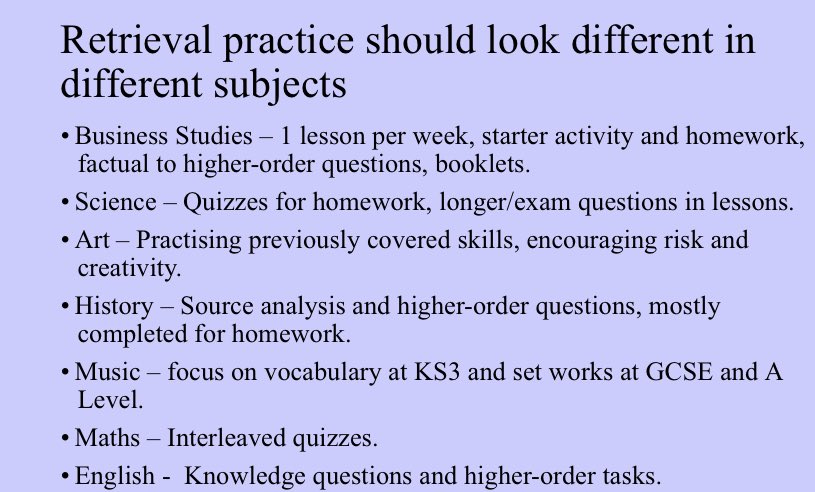
? However, retrieval should look different in all subjects, depending on the knowledge/skills that are most crucial. Some examples below:
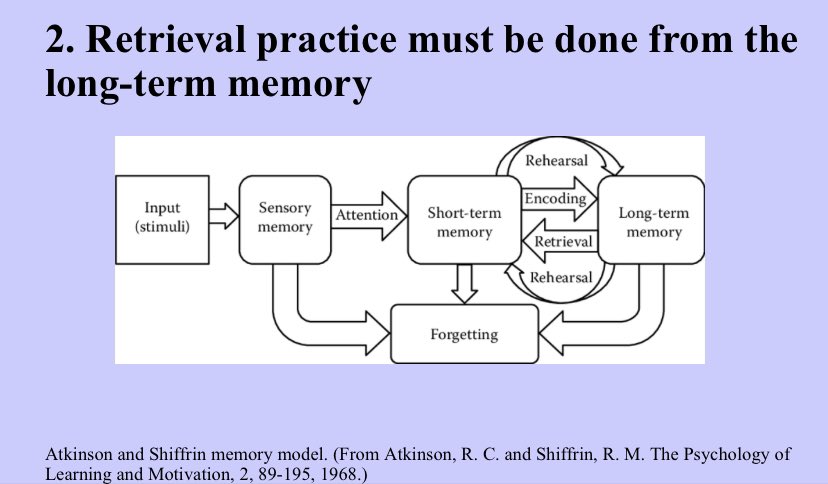
? The Cog Sci model of memory shows that to be effective and lead to the testing effect, retrieval should be done from long-term memory. This shows the importance of not using notes/aids initially, and all pupils doing the retrieval.
?Providing feedback has been shown to increase the impact of retrieval practice. This helps to cement correct answers and address errors or misconceptions.

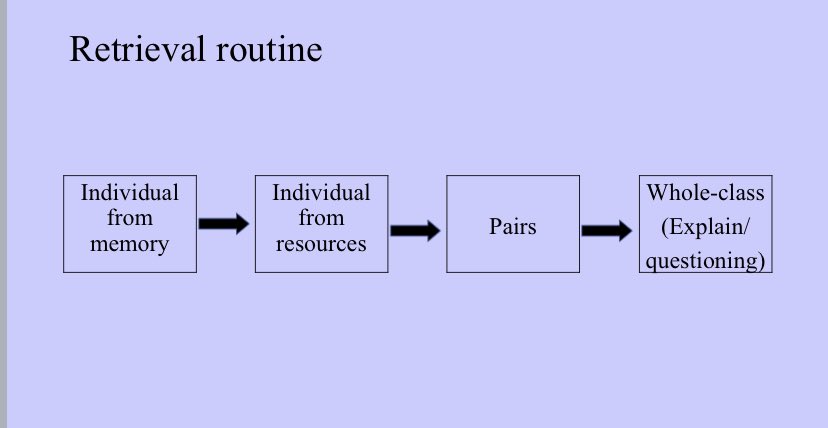
? The importance of individual retrieval and of feedback means a retrieval routine including individual retrieval, pupils correcting their own work and whole-class feedback may be useful.
? Spaced retrieval helps to increase storage strength as retrieval strength is lower, improving long-term retention.

? Repeated retrieval also enhances long-term retention. This suggests retrieval should be spaced and repeated over time.

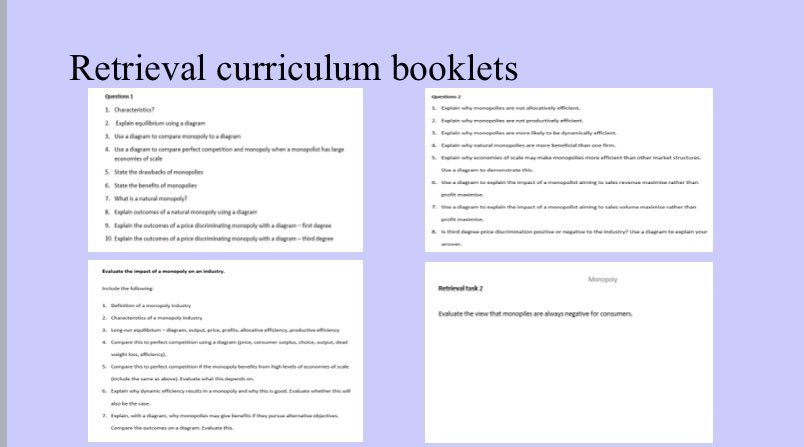
? This might take the form of a spaced retrieval practice curriculum which identifies the most important elements to be retrieved and when this will be done to ensure spaced learning.

? Or could be enacted in a retrieval practice booklet which spaces topics throughout.
?The generation effect suggests that asking pupils to generate rather than recognise correct answers may be more effective. This suggests if MCQs are used pupils should explain their answers.

? Success in retrieval is important to ensure pupils benefit from the testing effect. It may be important to give cues if needed initially. But these should be faded over time. Examples in second photo.
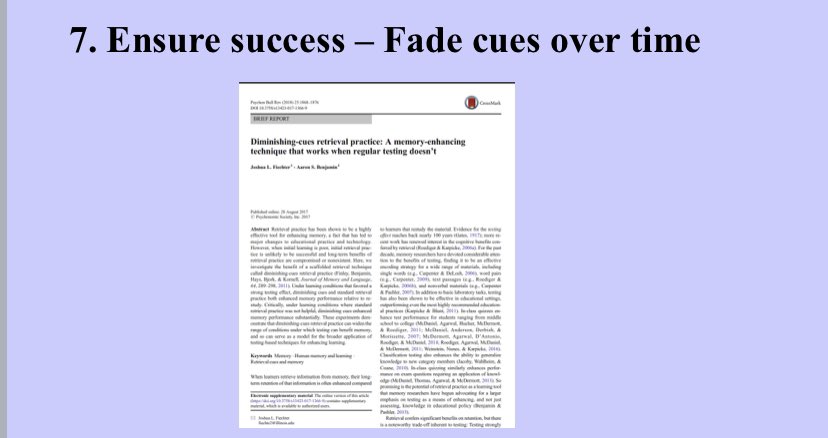

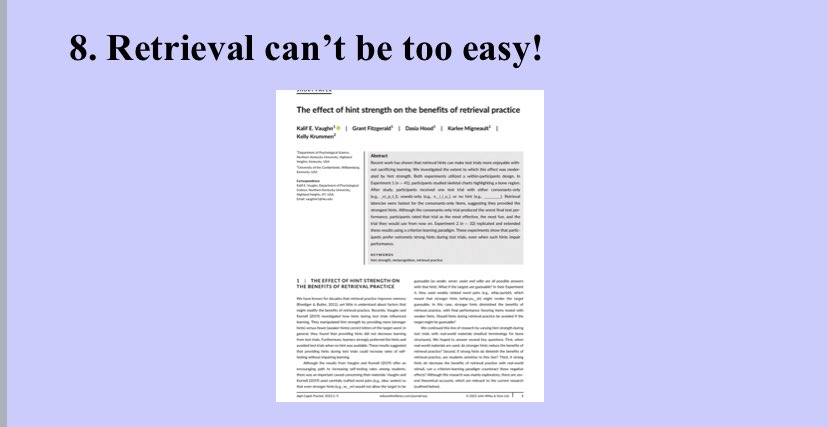
? Fading guidance is important as if retrieval is too easy pupils do not benefit from retrieval as much. Retrieval must still be challenging.
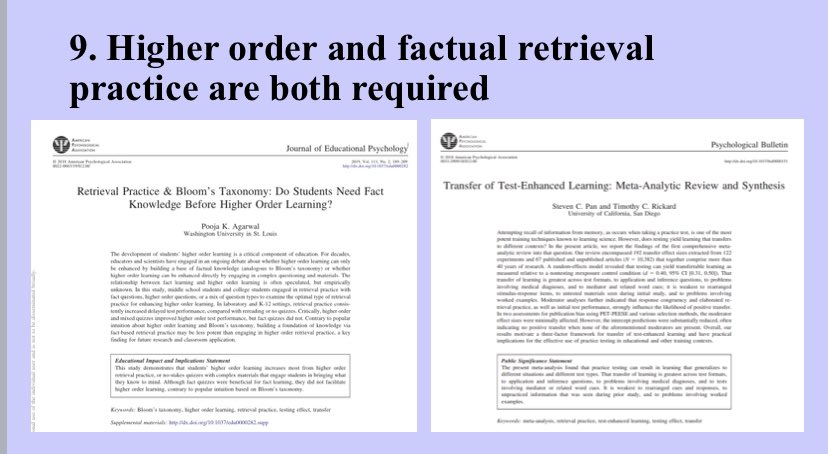
? Retrieval should be both factual and higher-order. This can include factual & higher-order questions and higher-order tasks. Examples in second photo.

? Eventually, retrieval should match the test format. This means the processing done during retrieval is the same as that required in the test which increases test performance.

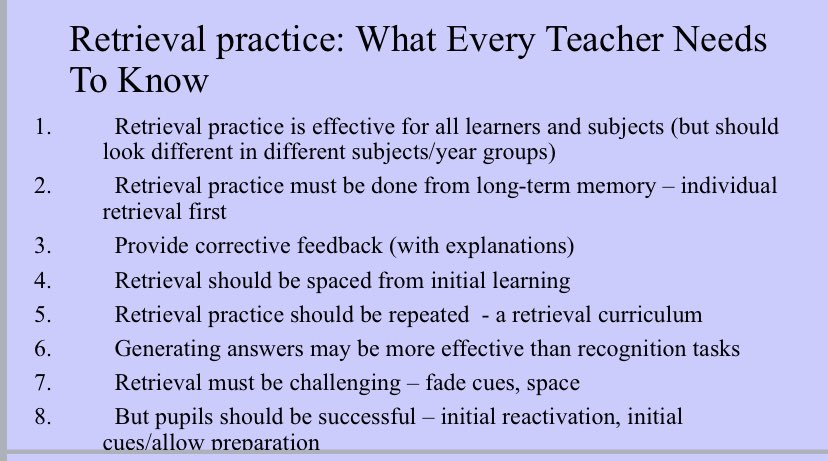
A summary:
? And some points for school leaders
1.Explain why retrieval is a priority for your school.
2.Ensure teachers understand why retrieval is effective inc an understanding of memory, retrieval/storage strength and desirable difficulties – it is more likely to be imp effectively.
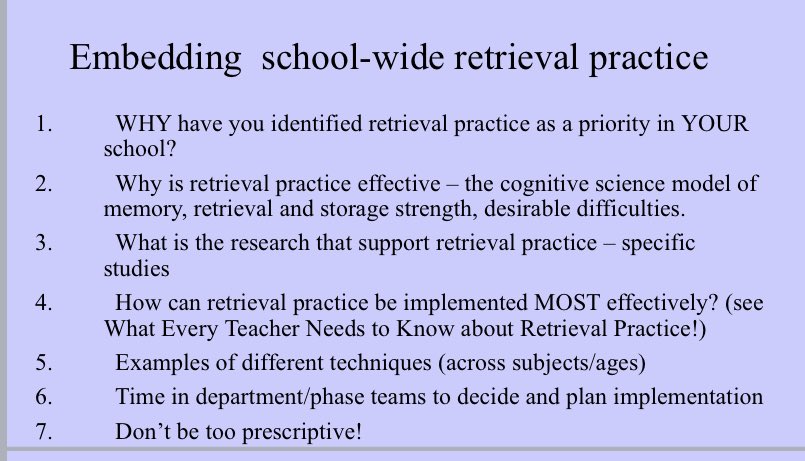
3.Share the research that supports retrieval with teachers – refer to specific studies/experiments. This gives more credibility.
4. Be clear on the ‘active ingredients’ of retrieval practice and what makes it most impactful.
5. Provide examples of retrieval in different subjects.
6. Make sure departments/year group teams have time to decide on how retrieval should be implemented in their classes an co-plan for this.
7. Don’t be too prescriptive – teachers are experts that should decide what retrieval looks like, and retrieval should look different for different subjects/ages.
End. ?
More here if you found this useful/interesting. ??. What Every Teacher Needs to Know: How to embed evidence-informed teaching and learning in your school
Another massive thank you to my amazing colleagues for their examples and support/passion in implementing retrieval and evidence-informed teaching.