
?Arachidonic Acid Pathway
This will look at the arachidonic acid pathway and its role in inflammation, vasoconstriction and vasodilation.
1/ So what is Arachidonic Acid? It comes from the lipid membranes of the cells. When most people think of inflammation, they think of immune cells and cytokines like TNF-a, IL-1b, C3a, C5a, or INF. These are all cytokines released by the immune process to promote inflammation.
2/ But not all damage is detectable by the immune cells. Sometimes its injury like a burn, cut or even a chemical. This is where the tissue damage pathway that is Arachidonic Acid comes into effect.
3/ There is a coordination and cooperation between the inflammation of the immune cells and the inflammation of arachidonic acid. Many people who study immunology miss this critical part about tissue damage inflammation.
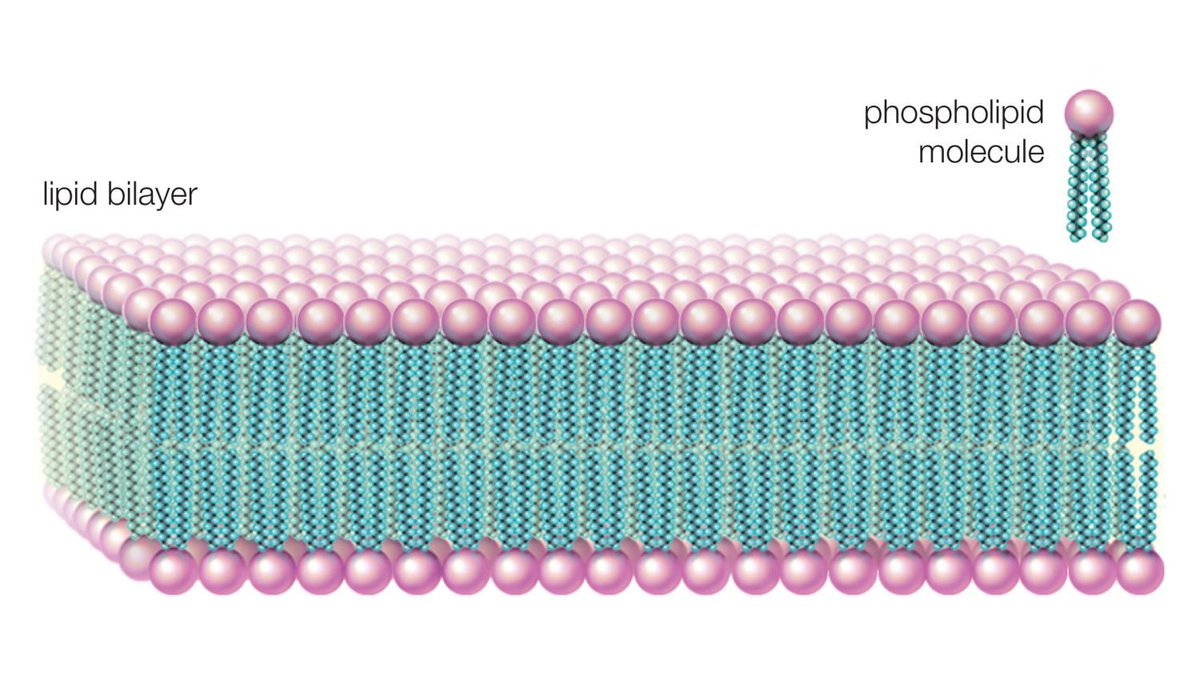
4/ So how does this work? It all starts with the phospholipids that make up the membranes of cells. These have a phosphate group linked to 2 long chain fatty acids. We get them from the foods we eat. They make up the phospholipid bilayer of the cell membrane.
5/ When the cell takes damage like from injury or from toxin release from pathogens like bacteria, the phosphates break loose. There is a key fatty acid in the phospholipids called linoleic acid. This converts into Arachidonic acid by and enzyme.
6/ The conversion of fatty acids from lipid membranes into Arachidonic Acid is done by and enzyme called Phospholipase A2 (PLA2). This coverts these fatty acids into Arachidonic Acid.
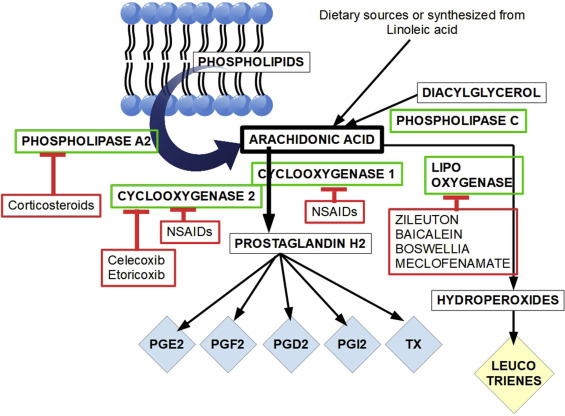
7/ This PLA2 enzyme is inhibited by steroids like Prednisone. This is how steroids blocks immune response and inflammation. Once the Arachidonic Acid is formed, it will be converted by 2 other enzymes which will take it down 2 different pathways.
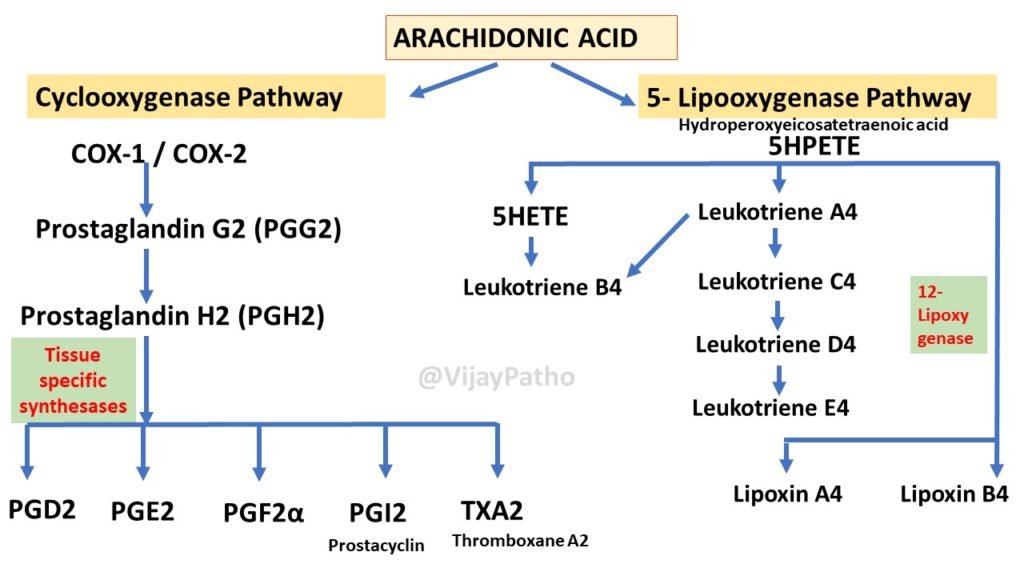
8/ One of the 2 enzymes is called Lipooxygenase which is called the LOX pathway. This creates Leukotrienes. Most of these play a role in smooth muscle in the lungs. This leads to bronchoconstriction. This plays a role in many disorders of the lung and anaphylaxis.
9/ Some of the many drugs that work in the lungs will affect the formation of Leukotrienes by the LOX enzyme. The only Leukotriene that doesn’t work in the lungs is Leukotriene B4 (LB4). This is a chemotactic agent that recruits immune cells to the site of the damage.
10/ This plays a role in inflammation and the recruitment of neutrophils which clean up bacterial infections. Where there is damage, there is usually infection by bacteria.
11/ The other enzyme is Cyclooxygenase which is called the COX pathway. This creates Prostaglandins. This is where things get very interesting. The COX enzymes can be blocked my over the counter pain medications like NSAIDs.
12/ This leads us to some of the benefits and side effects of these over the counter pain meds. The first is the formation of Prostaglandin E2 (PGE2) which leads to pain and fever.
13/ Prostaglandin D2 and F2 (PGD2 and PGF2) actually work in the stomach to promote healthy protection from the stomach acid in the lining. This is why over the counter NSAIDs can lead to stomach upset and sometimes bleeding and damage with chronic use.
14/ The last 2 major Prostaglandins take the PGH2 and synthesize the Prostacyclin (PGI2) or Thromboxane (TXA2). If you recall our intro to hemostasis, these are made by endothelial cells to regulate vasodilation and vasoconstriction.
15/ When the endothelial cells are healthy, they convert the prostaglandins into PGI2 which promotes healthy vasodilation. When the endothelial cells are damaged, they will convert the prostaglandins into TXA2 which promotes vasoconstriction to slow blood loss.
16/ The Arachidonic Acid pathway is critical in both healthy blood flow and inflammation.